How to Choose the Right Scrap Car Buyer
Published 18 January 2021 • Updated 27 October 2026 • 8 min read
Easy Scrap Car Collections
If you're thinking about scrapping your car, it's worth checking a few things before accepting an offer.
Not all car buyers work in the same way. Some buy vehicles purely for scrap metal, while others also purchase damaged cars, non-runners and vehicles that can be repaired or used for parts.
The highest quote isn't always the best deal, especially if collection charges or unexpected deductions are involved.
Here's what to look for when choosing a scrap or salvage car buyer.
1. Check Whether They Buy Scrap or Salvage Cars
Before requesting a quote, find out what types of vehicles the company buys.
A traditional scrap buyer may value your car mainly by its weight and metal content. A salvage buyer may also consider whether the vehicle can be repaired or has valuable parts.
For example, a newer car with a failed engine could still have a working gearbox, body panels and other parts worth recovering.
That doesn't mean every damaged car is worth more than scrap. It depends on the make, model, condition and demand for parts.
If your vehicle is relatively new or has a mechanical fault, it's worth comparing scrap and salvage offers.
2. Compare the Final Price, Not Just the Quote
It's sensible to get more than one offer before selling.
When comparing prices, check whether the amount includes collection and whether there are any charges.
Ask the buyer:
- Is collection included in the price?
- Will I receive the full amount quoted?
- Could the offer change when the vehicle is collected?
- What happens if I've forgotten to mention a fault?
A buyer may need to change an offer if the car's condition is different from what was described. However, any change should be explained before you agree to the sale.
Be cautious of buyers who offer a high price initially and then make unexplained deductions when they arrive.
3. Check Whether Collection Is Included
If your car doesn't start or has no MOT, you may need it collected on a recovery vehicle.
Before accepting an offer, confirm whether collection is free and whether the company can recover a non-running vehicle.
Also mention anything that could make collection difficult, such as:
- Flat tyres or seized brakes
- Missing wheels
- A vehicle parked in a garage or underground car park
- Limited access for a recovery truck
- Accident damage that makes the car difficult to move
Giving the buyer these details beforehand can help avoid delays or unexpected charges.
4. Check the Company's Reviews
Customer reviews can tell you a lot about how a company operates.
Look for reviews that mention:
- Whether the agreed price was paid
- Collection arriving as arranged
- How the company dealt with problems
- Clear communication
- Payment being received
Don't judge a company by its star rating alone. Read a mixture of recent reviews and look for comments about the actual collection process.
A company with genuine, detailed customer feedback is easier to assess than one with very little information available.
5. Make Sure the Vehicle Will Be Handled Correctly
If your car is being permanently scrapped, it must go to an Authorised Treatment Facility (ATF).
These facilities are authorised to handle end-of-life vehicles and safely remove hazardous materials such as oil, fuel and batteries.
You can check authorised facilities using the official government service.
However, not every vehicle sold to a scrap or salvage buyer is permanently destroyed.
Some damaged or non-running cars are bought for repair or resale. In that situation, the correct ownership transfer is needed rather than a Certificate of Destruction.
It's worth asking the buyer what will happen to your vehicle.
6. Understand the Paperwork
When selling your vehicle, make sure the correct DVLA notification is completed.
The process depends on whether the car is being scrapped or sold to a motor trader.
If your vehicle is permanently scrapped, an Authorised Treatment Facility must issue a Certificate of Destruction for an eligible car or light van within seven days.
If the vehicle is bought for repair or resale, a Certificate of Destruction will not be issued.
Keep a record of the sale and any paperwork you receive.
For more information, read our Certificate of Destruction guide.
7. Check How and When You'll Be Paid
Always confirm the payment arrangements before collection.
In England and Wales, scrap metal dealers cannot pay cash for scrap vehicles. Payment must be made by an approved method, such as bank transfer or non-transferable cheque.
Different rules can apply when a vehicle is genuinely being bought for repair or resale rather than scrap.
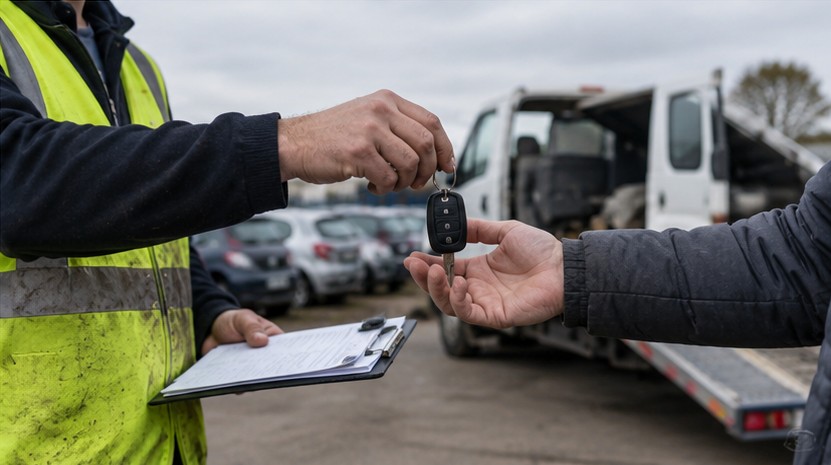
Before handing over the keys, check that the agreed payment has been received or that you're satisfied with the payment arrangements.
Be cautious if a buyer asks you to hand over the vehicle without clear payment terms.
8. Be Honest About Your Car's Condition
A buyer can only provide an accurate quote based on the information they're given.
Tell them about any known problems, including engine faults, gearbox issues, accident damage or missing parts.
If the vehicle has been recorded as Category S or Category N, make that clear too.
Photos can help a buyer understand the condition, particularly if the car has accident damage.
Providing accurate details reduces the chance of disagreement when the vehicle is collected.
Scrap Buyer or Salvage Buyer – Which Is Better?
It depends on the vehicle.
- Old car with little remaining value — A scrap buyer may offer a suitable price.
- Newer car with engine or gearbox failure — Compare salvage offers before scrapping.
- Accident-damaged car — Check its insurance category and salvage value.
- MOT failure — Compare repair costs with scrap and salvage offers.
- Car with valuable working parts — A salvage buyer may offer more than scrap value.
There's no guarantee that one type of buyer will always pay more.
The sensible approach is to understand your car's condition, compare offers and check the terms before agreeing to sell.
Frequently Asked Questions
Should I accept the highest scrap car quote?
Not automatically. Check whether collection is included, whether there are any charges and whether the buyer is likely to honour the agreed price.
Do I need a valid MOT to sell my car?
No. You can sell a car without a valid MOT. If it cannot legally or safely be driven, arrange suitable transport.
Can I sell a car that doesn't start?
Yes. Scrap and salvage buyers purchase non-running cars. Make sure the buyer knows the fault and can arrange recovery.
Will I always receive a Certificate of Destruction?
No. A certificate is issued when an eligible vehicle is permanently scrapped at an Authorised Treatment Facility. Vehicles bought for repair or resale do not receive one simply because they've been sold.
Is free collection important?
It can be, especially if your vehicle needs recovery. Always compare the final amount you'll receive rather than looking at the headline quote alone.
Final Advice
Before selling your car, take a few minutes to check the buyer, compare offers and understand the collection and payment arrangements.
Find out whether your vehicle is being valued for scrap or salvage, and make sure the correct paperwork will be completed.
A reputable buyer should be able to explain the process clearly and answer your questions before you agree to anything.